Showing posts with label Film. Show all posts

Tuesday, 29 May 2012

RETROMANIA: Pop Culture's Addiction To Its Own Past By Simon Reynolds


Dummy magazine's "The 10 Best Modern Music Books": #1. Retromania: Pop Culture’s Addiction To Its Own Past "There’s no doubting technology’s ability to reproduce and discover art and artists of the past has had an impact on the retrogressive eye of contemporary culture and music. Whether you agree with his polemical tract, Simon Reynolds’s era-defining book is as essential as it gets."
"The best book I read recently is Retromania by Simon Reynolds. It's fantastic. Reading Simon Reynolds is like getting in a warm bath"--Jason Schwartzman, GQ Style
Visit Simon Reynolds Blog

Monday, 28 May 2012

Plan B's iLL Manors: 'This is the true, dark reality'


The song inspired by last year's riots has now become a film. Plan B, aka Ben Drew, explains why he was driven to make it.
"A lot of people outside this environment don't believe it exists," he continues. "So in the film, rather than glamorise it, I'm trying to say to people this is the true, dark reality. This is what happens. It's not cool. No drug dealer really has the last laugh."
Dark reality is, if anything, an understatement. The film is an unapologetic and at times unnerving and uncomfortable drama, a depiction of life in the most unloved and unforgiving streets of east London, seen through the interwoven lives of its dysfunctional characters, linked and part-narrated by six new Plan B tracks. Starring established British actors such as Riz Ahmed (aka rapper Riz MC) and Natalie Press alongside unknowns such as Keith Coggins (Drew's godfather in real life) and Ryan De La Cruz, it shows the spirals of hopelessness and violence that vulnerable individuals can easily be sucked in to.


ILL Manors is not a manifesto or a direct polemic, but, like many of the best protest artforms, concentrates on capturing a mood – of desolation and anxiety. Rather than judging or preaching, it's more concerned with encouraging debate about the root of the problems it presents and demonstrating how they can have a domino effect on people's lives. It's also a surprisingly accomplished piece of work for a directorial debut and Drew, you could argue, is becoming a much-needed spokesman for an alienated sector of our society that feels it doesn't have a voice.

"I just wanted to say, 'They're not all scum,'" says Drew of his characters. "They act the way they do because of the shit that happened to them that wasn't their fault. It's not your fault if your parents abandon you and put you in a home. It's not your fault, but there comes a time when you have to take responsibility for your actions. But for a lot of them, there's no one there saying, 'All that shit that happened to you in the past is fucked up, man, and I feel really sorry for you, but you're just repeating that bad and negative energy through what you're doing and you can't keep blaming the past for the way you're acting now.'"

Read the full interview/article: The Guardian

Saturday, 14 April 2012

The Mean World Syndrome


Mean World Syndrome is a phenomenon where the violence-related content of mass media convinces viewers that the world is more dangerous than it actually is, and prompts a desire for more protection than is warranted by any actual threat. Mean World Syndrome is one of the main conclusions of cultivation theory. The term "Mean World Syndrome" was coined by George Gerbner, a pioneer researcher on the effects of television on society, when he noted that people who watched a lot of TV tended to think of the world as an unforgiving and scary place.

Wednesday, 21 March 2012

PopCult Mag: Online Magazine (Ideas)

Click above to visit site
PopCult is an on-line magazine simply dedicated to pop culture. It is worth a look to get some solid discussion of contemporary artefacts and issues as, for the most part, other magazines are writing about entertainment products, not necessarily "culture." What you typically get in the regular press are articles interviewing celebrities who just happen to be selling something: a new movie, a new CD, a new TV show, or just their own fabulousness. Consequently, most of the media that's described as being about "pop culture" is really about the personalities of famous people.

What comes across in PopCult is a genuine love and interest in popular culture, left-field arts, personal obsessions and a site that actually believes in what it writes about.


Featured Article
Click above to read full article

Extract:
Take a look at your local newsstand and here's what you'll see: racks upon racks of magazines that look almost identical. Whether they focus on music, fashion, cigars, fitness, women, or men, most magazines typically feature a grinning celebrity on the cover peeking out from behind squadrons of coverlines. It wasn't always like this.
From the "golden age" of magazine popularity in the 1920s-'30s and on through to the early '60s, even the most mainstream of magazines tried to lure in readers with distinctive design, original typography, and striking artwork. The cover was considered a canvas–rather than merely a billboard–by groundbreaking art directors like Mehemed Fehmy Agha (Vogue, House & Garden, Vanity Fair), Alexey Brodovitch (Harper's Bazaar), and Eleanor Treacy and Francis Brennan (Fortune). These and other designers of that era transformed magazines into works of art in themselves.

Saturday, 10 March 2012

Wonder Women! Searches for Pop Culture’s Heroines


Katie Pineda, a young girl who appears in Wonder Women! The Untold Story of American Superheroines, will teach viewers a lesson about comics that few others could.

An avid fan of comic books, Katie can talk about her favorites at length. Despite the occasional stammer, she is incredibly well-spoken for a fourth grader. But speaking isn’t how she teaches. What we learn from Katie is through her favorite character: Wonder Woman. And what we learn is that she probably idolizes the DC Comics character because, frankly, there aren’t nearly enough superheroines worth emulating.

“I just thought, ‘[Wonder Woman is] important in all these different moments historically, and wouldn’t it be interesting to hang up a larger dialog about women as heroes and women represented in popular culture and use her as a vehicle to guide that?’” Wonder Women! director Kristy Guevara-Flanigan said in an interview with Wired.

The fact that there aren’t many female heroes in comic books isn’t that shocking — comics have always been something of a sausagefest — but what seems to be overlooked is girls like Katie, one of many young women who would love a few more heroines to look up to. And, as this documentary shows, Wonder Woman has had such an impact since her creation in the early 1940s — from inspiring Rosie the Riveters to Riot Grrrls — that she herself deserves more credit than she gets.

Wonder Women!, which premieres Saturday at the South by Southwest Film festival, was originally conceived after Guevara-Flanigan — whose day job is teaching film at Diablo Valley College in the San Francisco Bay Area — saw an article about Gail Simone, the first female ongoing writer for the comic from 2007 to 2010.

What the director found as she started digging was that Wonder Woman’s original incarnation, as created by William Moulton Marston in 1941, was a very feminist character that became fairly milquetoast during the more conservative post-World War II era, only to be revived and embraced during the Second Wave Feminist movement (the first cover of Ms. magazine featured an image of the heroine with the line “Wonder Woman for President”).

Guevara-Flanigan’s documentary traces how Wonder Woman’s presence influenced the Riot Grrrl political punk movement of the 1990s — Bikini Kill and Le Tigre frontwoman Kathleen Hanna trashing of the Spice Girls’ embrace of “Girl Power” is particularly phenomenal — and also puts in stark contrast the fact that so many women in the 20th century looked up to Wonder Woman because there really weren’t many other characters on which they could train their admiration.

“I think when you’re little, and looking at people’s knees, you’re so powerless and so unequal that it’s really helpful to be able to think yourself into someone who is powerful,” Ms. magazine co-founder Gloria Steinem says in the film. “Even more powerful than grown-ups.”

Drawing on input from other feminist thinkers, comic book scholars and fans at New York Comic Con (as well as Katie Pineda), Wonder Women! turns what could’ve just been a flat history of a comic book character into a brief study of female empowerment in the last century. This is especially clear in a vignette with a young single mother, who serves as the narrative’s real-world superhero (complete with Wonder Woman tattoo).

In 2010, social sciences scholar Kathryn Gilpatric — a subject of the film — did a study or 157 female action characters and found that half were evil characters, doomed to death. Another 30 percent that weren’t villains were killed off, dying in self-sacrifice (think Trinity in The Matrix trilogy, Phoenix in X-Men: The Last Stand).

The documentary doesn’t end on a downer. In a brief montage, we are reminded that in recent years new heroines have risen out of Phoenix’s ashes, so to speak. Lisbeth Salander has proven hacking (among other tools of vengeance) can enable a whole new kind of justice in the The Girl With the Dragon Tattoo book and films. Katniss Everdeen in The Hunger Games will soon show theater audiences just how revolutionary female self-preservation can be.

“Not all superheroes have powers, like, most of them are just regular people, but they became something more, and that’s how they inspire me,” she says in the film. “Sometimes I get picked on at school but I just tell myself, ‘Keep going, keep going, you’re going to be more.’ Because some day they’re going to be wishing that they treated me better.”

Edited from: Wired.com

Sunday, 8 January 2012

Mystery Chinese blogger scores a hit with Cultural Revolution novel

Under The Hawthorn Tree has already sold more than a million copies in China alone.

A novel by an anonymous Chinese author living in America, which started life as a blog, has become a worldwide publishing sensation. It has been snapped up by publishers in 15 countries who have been impressed by the fact that it has sold more than a million copies in China and inspired a film by an Oscar-winning Chinese director. Some publishers even bought it before reading a translation. Yet none of the publishers, translators or editors knows the author's identity.

Under the Hawthorn Tree, a tragic love story set during the Cultural Revolution, is written under the pen name of Ai Mi. All that is known about the author is that she leads a reclusive life in Florida, having gone there to study. She is thought to be in her fifties or sixties, if only because her insight into the Cultural Revolution suggests someone who experienced first hand the political and social persecution of Mao Zedong's last decade. She tells her readers that it was inspired by a true story. Her central character – a young woman from a "politically questionable family" who falls in love with the son of a general – is based on a real person with names and places disguised.

The film version, directed by Zhang Yimou, the director of 'House of Flying Daggers', will be released in Britain at a later date.

Read the full article here.

Friday, 6 January 2012

High Culture and Popular Culture

There are lots of different ideas and definitions of these two terms - you will be expected to explore them and provide examples of them in your work and examination answers.

Popular culture would include most forms of mass communication or commercial forms of art such as pop and rock music, TV soap operas, romance stories, blockbuster films, tabloid newspapers etc.

High culture would include classical music, documentary, serious novels, avant-garde or experimental films, broadsheet newspapers, great art such as Van Gogh, Rembrandt etc
We should be interested in this distinction because certain theoretical groups such as Marxists and Feminists see popular culture as either big business (or the ruling classes) making money out of us and keeping us happy or in the case of feminists, exploiting us for money.

High culture, on the other hand, is seen as pure art, an expression of individual but universal ideas being communicated to other individuals who appreciate and interpret these pieces of art - stories, paintings, films - in their own, unique way. High culture can also be a force for oppression because it is held up as the model all cultural artefacts and art should aspire to.

Wednesday, 21 December 2011

Is Twilight's Bella Swan a bad role model?

Feminists and academics are concerned that 'Twilight' heroine Bella Swan, a teenager who falls in love with a vampire, presents them with a poor role model. Does 'Twilight: New Moon' promote unhealthy relationships?

Bella is bad for young girls: The character of Bella sends a "dangerous" and "discouraging" message to young girls everywhere, says Krystal Clark in Screen Crave. The "constant influence of the male figures in her life," especially vampire boyfriend Edward Cullen, leaves her with "no identity of her own." The film's "nonchalant attitude" toward this is harmful, especially to "women in her age group who are starting to date for the first time."

Falling in love is not anti-feminist: These "quote-unquote feminist arguments" against 'Twilight' are getting tiresome, says Catherine Connors at Beliefnet. People say Bella sacrifices herself for Edward, but don't forget she "fights hard" to "carve a space in this world" for their love. And in the end, she "gets what she wants," despite what Edward wants for her. "Why does love necessarily mean sublimation?"

Twilight promotes conservative values:The values of the 'Twilight' world are more “1809 than 2009,” says Hank Sartin in Time Out Chicago. Bella and Edward must remain chaste in case he loses control of his “insatiable bloodlust.” If feminists must get worked up, this “abstinence-only message coded through vampirism” is worrying evidence of a “conservative response to the radical changes in sexual politics of the last decade.”


Tuesday, 6 December 2011

PressPausePlay


"The digital revolution of the last decade has unleashed creativity and talent in an unprecedented way, with unlimited opportunities. But does democratized culture mean better art or is true talent instead drowned out? This is the question addressed by PressPausePlay, a documentary film containing interviews with some of the world's most influential creators of the digital era".
Go to the website, where you can download the film for free.

With thanks to Sarah Proctor

Sunday, 27 November 2011

Barcode.tv

Media, Branding

Objects fill our spaces and shape the ergonomics of day-to-day living; we design, manufacture, purchase and use them in response to needs, wants and functions. Far more than tools or decorations, they’re extensions of our relationship to the surrounding world; every object reveals something about the person using it.

With 100 short films by 30 Canadian and European directors, this interactive documentary for the National Film Board of Canada explores society’s relationship with objects and, with new perspectives, shakes up our habitual ways of seeing them. Through the web and iPhones it extends the concept of interactivity by diverting user attention away from screens and back to the real world.

Exploration begins through a simplified nav that gives visitors the fewest choices possible: Search, Scan, Share. By scanning the universal symbols of consumerism (bar codes), the site drives an experience through the objects surrounding each user and brings them to life through documentary content that promotes interaction between online and offline, encouraging people to use objects as gateways to discovery.

Visit the interactive site here.

Tuesday, 22 November 2011

Mod: Cultural History

The Mods, dressed in dapper attire and riding Vespas, believed they were truly modern—that they alone personified “the future” and “change.” Originally they were mostly working-class youths who wanted out of their social “caste.” They also thought the Rockers—dressed in leather and riding motorcycles—symbolized the past. Rockers embodied the uncouth ignorance and urban grit of working-class life that Mods wanted to escape. However, this story of identity moves well beyond southern British beaches and the stereotypical Mods depicted in Quadrophenia.

The Mod youth culture of the mid-1960s emerged from what British historian Arthur Marwick describes as a “unique era.” The decade’s significance is bound to distinct and rapid cultural transformations. Key changes included more ubiquitous use of technology such as color television and affordable jet travel, new concepts of identity formation via fashion, and, most importantly, the growing cultural influence of young people. More so than youth of previous decades, Mods consciously and deftly galvanized the quickly accelerating communication technologies to transmit their style around the world. Between 1964 and 1967 a transnational flow of youth- oriented television shows, films, print media, and commodities such as records and clothes globally united young people. Mod’s innovative and androgynous fashion sense raised questions about gender aesthetics and sexuality, while the style’s global reach expressed a desire for international openness among youths. Fueled by the marriage of expansive media technologies and utopian, generation-specific impulses, Mod’s international impact on youth during the mid-60s was unprecedented and foreshadowed the international sweep of the late 60s counterculture. While the original wave of Mod peaked for just a few years (early 1964 to mid-1967), its adoption by youth in succeeding generations suggests an enduring cultural journey.

Read more here.

Monday, 7 November 2011

Visual Analysis: Meaning In Composition

To reduce the concept to a crude rule of thumb in the composition of a shot in a movie: A person located somewhat to the right of centre will seem ideally placed. A person to the right of that position will seem more positive; to the left, more negative. A centered person will seem objectified, like a mug shot.

Now what do I mean by "positive" or "negative?" I mean that these are tendencies within the composition. They are not absolutes. But in general terms, in a two-shot, the person on the right will "seem" dominant over the person on the left.

In simplistic terms: Right is more positive, left more negative. Movement to the right seems more favorable; to the left, less so. The future seems to live on the right, the past on the left. The top is dominant over the bottom. The foreground is stronger than the background. Symmetrical compositions seem at rest. Diagonals in a composition seem to "move" in the direction of the sharpest angle they form, even though of course they may not move at all. Therefore, a composition could lead us into a background that becomes dominant over a foreground.

Tilt shots of course put everything on a diagonal, implying the world is out of balance. I have the impression that more tilts are down to the right than to the left, perhaps suggesting the characters are sliding perilously into their futures. Left tilts to me suggest helplessness, sadness, resignation. Few tilts feel positive. Movement is dominant over things that are still. A POV above a character's eyeline reduces him; below the eyeline, enhances him. Extreme high angle shots make characters into pawns; low angles make them into gods. Brighter areas tend to be dominant over darker areas, but far from always: Within the context, you can seek the "dominant contrast," which is the area we are drawn toward. Sometimes it will be darker, further back, lower, and so on. It can be as effective to go against intrinsic weightings as to follow them.

Taken from:
By Roger Ebert

Visual Analysis: The Taxonomy of Film Posters

This blog has distilled movie poster design into 13 categories. Despite the lighthearted approach and overwhelming generalisations of the critique, the visual analysis is spot-on. Composition, colour, perspective and typefaces are all considered.

Friday, 28 October 2011

Britain in a Day

On Saturday November 12th, you can get involved in a project that seeks to represent 'Britain in a Day'. You are asked to take a camera with you, whatever you are up to, and film. To find out more go to the project website.

Wednesday, 21 September 2011

'Bad Education' (2004) - Gender, Orientation and Persona in cinema

Pedro Almodóvar is a Spanish film director, screenwriter and producer. Almodóvar is arguably the most successful and internationally known Spanish filmmaker of his generation. His films, marked by complex narratives, employ the codes of melodrama and use elements of pop culture, popular songs, irreverent humor, strong colours, glossy décor and "lesbian, gay, bisexual, and transgender" themes. Desire, passion, family and identity are among Almodóvar’s most prevalent themes. His films enjoy a worldwide following and he has become a major figure on the stage of world cinema. Read a review of his 2004 release 'Bad Education' here in Slant Magazine.

Wednesday, 14 September 2011

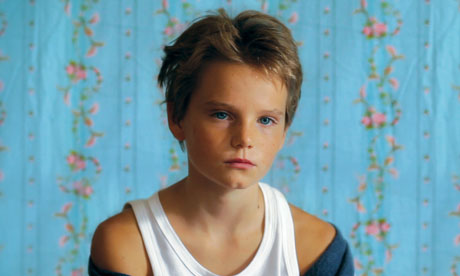
'Tomboy'

In this article in The Guardian's Society section, Stephanie Theobald discusses the new French film 'Tomboy' (as seen at The Edinburgh Film Festival in June) and how it revived her own childhood experiences.

Sunday, 28 August 2011

Mark Kermode and the Intelligent Blockbuster

Critic Mark Kermode has outspoken views on the movie industry's underestimation of the mainstream film-goer's intelligence. He is just as vocal about the audience's "diminished expectations". Read his comment in The Observer here.